
TCEQ issued over $8 million in environmental penalties in a single fiscal year, often for simple waste labeling and storage errors. Maintaining full compliance keeps your project moving and prevents high costs from legal fines. Every facility operator must stay aware of the rules that govern industrial waste and hazardous materials.
Call (713) 714-0413 to schedule a free consultation and ensure your facility meets all waste compliance requirements.
Waste Compliance Requirements Texas: What Are the Waste Compliance Requirements for Texas Industrial Facilities?
waste compliance requirements Texas are governed by a dual framework involving the EPA’s federal RCRA program and state-level enforcement by the TCEQ. Under state code, industrial facilities must perform waste determinations for every stream to classify items as non-hazardous, Class 1, Class 2, or hazardous materials before disposal. The Texas Commission on Environmental Quality enforces strict cradle-to-grave rules that track waste from generation to disposal and dictate exactly how you must handle container labeling and storage. A clear compliance program helps you avoid common violations like open containers or expired accumulation dates while protecting your Texas facility from sudden. Unannounced regulatory inspections and costly fines.
Federal oversight through the RCRA cradle to grave program
Industrial sites in Texas must navigate two complementary regulatory layers: federal RCRA rules from the EPA and state-level enforcement by the TCEQ. Both sets of laws apply simultaneously, and you must meet both to maintain waste compliance and avoid substantial penalties.
The Environmental Protection Agency (EPA) sets the baseline for hazardous waste regulation through the Resource Conservation and Recovery Act (RCRA). This law creates a comprehensive cradle-to-grave tracking program that follows waste from the moment it is generated through storage, transportation, treatment, and final disposal.
The program ensures hazardous waste does not contaminate soil or groundwater. It governs how you generate, store, transport, and treat waste. Every step requires clear documentation demonstrating regulatory compliance. If your site generates any hazardous waste, you must follow these federal rules to keep your operation running without interruption.
State enforcement by the TCEQ and 30 TAC rules
In Texas, the Texas Commission on Environmental Quality (TCEQ) enforces federal RCRA standards through state-specific regulations codified in the 30 Texas Administrative Code (TAC), Chapters 330 through 335. The TCEQ has authority to conduct unannounced inspections at any time, and state requirements are at least as stringent as federal rules.
Texas regulations often layer additional compliance steps on top of the federal baseline. The TCEQ issued over $8 million in fines in early 2025 for violations ranging from improper labeling to incomplete manifests. Understanding both the federal and state frameworks is essential for any Texas facility operator.
Texas specific waste classes and registration needs
Texas uses its own classification system for industrial waste. A waste determination is required to identify the correct class for each waste stream. Waste falls into one of three categories: Class 1, Class 2, or hazardous waste. Hazardous waste often includes listed wastes such as F001, F002, F003, and F004 spent solvents or F022 and F023 wastes.
Class 1 waste is the most regulated non-hazardous category. It can pose a hazard to human health or the environment if handled improperly. Most facilities generating these wastes need a Solid Waste Registration (SWR) number from the TCEQ and an EPA ID. Proper classification is the foundation of any compliant waste management program.
How to Classify Your Facility’s Waste Streams
Waste determinations are the cornerstone of Texas waste compliance. Every waste stream your facility generates must be evaluated and classified. Under TCEQ rules, you must run a waste determination for every stream, from production byproducts to routine maintenance wastes. Failing to classify waste correctly can lead to significant fines and safety risks for your team.
The process of waste identification
Begin by surveying every waste stream your plant produces. Examine all areas of your facility, from the production floor to the break room and maintenance shop. Common industrial wastes include used oils, spent solvents, metal scraps, and chemical residues. Once you have a complete inventory, you can begin classification. All factory waste must be treated as industrial waste until its class is confirmed through proper analysis.
A professional environmental compliance audit can help identify hidden waste streams that many plant managers overlook, such as aerosol cans, lab chemicals, or spent filters. Finding these early prevents issues during a state inspection. Each waste stream requires its own documentation file showing how its classification was determined.
Sorting hazardous and industrial waste
Determine whether your waste meets the federal definition of hazardous waste. The EPA classifies hazardous waste into two categories. Listed wastes appear on the F, K, P, and U lists based on their source or chemical composition. Characteristic wastes exhibit ignitability, corrosivity, reactivity, or toxicity. If your waste matches any of these criteria, it must be managed as hazardous waste.
For non-hazardous industrial waste, the TCEQ uses three tiers: Class 1, Class 2, and Class 3. Class 1 waste poses the highest risk to health or the environment. Class 2 waste presents lower risk, such as general plant trash. You must maintain supporting data for every classification decision.
Steps for waste determination
- Identify all waste streams. Document every solid, liquid, or gas waste generated at your site, including routine and periodic streams.
- Apply exclusions. Check whether any waste is exempt from regulation. Some recycled materials or household-type wastes may not qualify as industrial waste.
- Test for hazardous characteristics. Analyze the waste using laboratory testing or process knowledge. Determine whether it is listed or exhibits ignitable, corrosive, reactive, or toxic traits.
- Assign an industrial class. For non-hazardous industrial waste, select Class 1 or Class 2 based on the level of risk the waste presents.
- Document your results. Maintain all test data and classification notes. These records must be available to demonstrate compliance during an inspection.
Managing these industrial facility compliance checklist items requires consistent attention. If you are uncertain about a waste stream, consult an environmental professional. Getting the classification right the first time prevents costly legal exposure later.
Generator Status: Know Your Regulatory Category
Your generator status determines which waste compliance requirements apply to your Texas facility. This classification depends on the volume of hazardous waste your site produces each month. The EPA and TCEQ use these categories to scale regulatory obligations proportionally. Understanding your generator status is the first step toward maintaining compliance.
Finding your generator group
There are three main categories for hazardous waste generators. Very Small Quantity Generators (VSQGs) generate less than 100 kilograms of hazardous waste per month. Small Quantity Generators (SQGs) generate between 100 and 1,000 kilograms per month. Large Quantity Generators (LQGs) generate more than 1,000 kilograms of hazardous waste each month.
You can find a detailed regulatory summary for generators on the EPA website. If you exceed your limit for even one month, your regulatory obligations change for that period. Tracking waste volumes monthly is essential for staying in the correct category and avoiding enforcement actions.
Many facilities shift between categories during major cleanouts or production surges. If your waste volume increases temporarily, you must meet the requirements of the higher category. A professional environmental compliance audit can help verify your current status and identify potential category changes before they create compliance gaps.
Managing storage and EPA numbers
Each generator category has different accumulation time limits. LQGs may store waste for a maximum of 90 days without a permit. SQGs have 180 days, or 270 days if the disposal facility is more than 200 miles away. VSQGs can accumulate up to 1,000 kilograms of hazardous waste on-site with no specific time limit.
These accumulation limits prevent the unsafe buildup of hazardous materials at your facility. In Texas, most SQGs and LQGs must obtain an EPA ID number and a Solid Waste Registration (SWR) number from the TCEQ. These identifiers enable the state to track waste from generation through final disposal. VSQGs typically do not need these IDs, though some disposal facilities may still require them.
Staff training and emergency plans
Large Quantity Generators face the most comprehensive safety and reporting requirements. LQGs must maintain a detailed contingency plan that outlines procedures for spills, fires, and other emergencies, including contact information for local emergency responders. This plan must be shared with local police and fire departments.
LQGs must also submit a biennial report to the EPA by March 1 of each even-numbered year. Staff training is another critical requirement. All personnel who handle hazardous waste must receive training within six months of hire and complete annual refresher training. LQGs must inspect waste storage areas weekly, while SQGs can conduct monthly inspections.
| Requirement | VSQG | SQG | LQG |
|---|---|---|---|
| Monthly Generation Limit | Less than 100 kg | 100 to 1,000 kg | More than 1,000 kg |
| Accumulation Time Limit | None | 180 or 270 days | 90 days |
| EPA ID and SWR Number | Not required | Required | Required |
| Contingency Plan | Not required | Basic plan only | Full written plan |
| Biennial Reporting | Not required | Not required | Required |
| Staff Training | Basic safety | Basic safety | Full annual training |
| Inspection Frequency | Not set | Monthly | Weekly |
Storage, Labeling, and Container Management Requirements
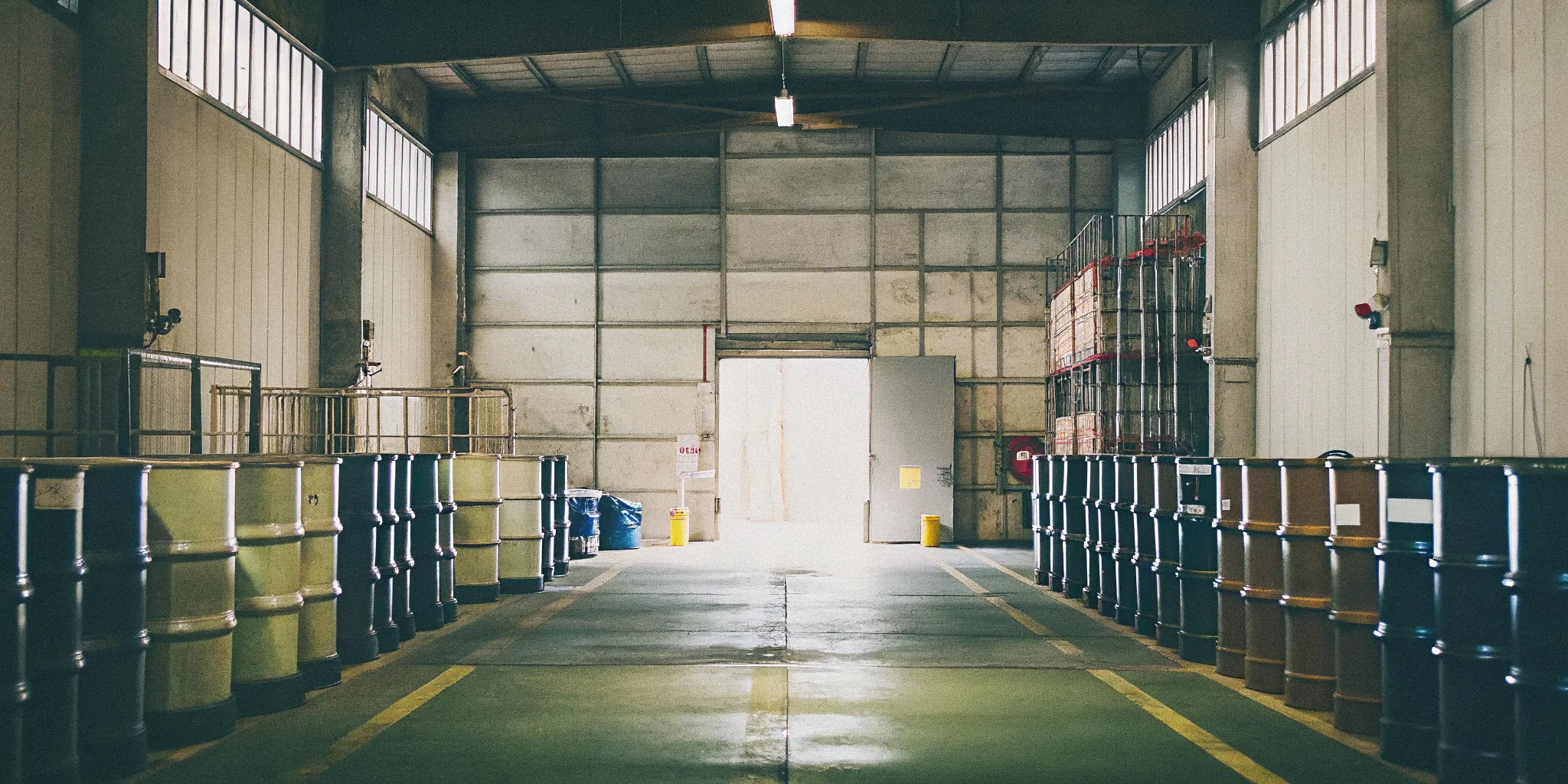
Container management is a high-violation area in Texas waste compliance. Improper storage can result in significant fines and create safety hazards for workers. Following proper labeling and container protocols protects your employees and demonstrates regulatory diligence during state inspections.
Proper labeling and date tracking
Every container holding hazardous waste must be clearly marked. Labels must display the words “Hazardous Waste” in a legible manner and include the accumulation start date. This date marks when waste was first placed in the container in the main storage area and is critical for tracking storage time limits.
According to federal regulations, clear labeling is mandatory for all generator categories. A systematic labeling approach is the foundation of an industrial facility compliance checklist that keeps your site ready for inspection. Without proper labels, workers may not know the contents of a drum, leading to dangerous mixing or spills.
Container condition and safety rules
Containers must be in good condition, free from leaks, rust, or significant damage. The container material must be compatible with the waste inside. For example, certain acids can corrode metal drums, requiring plastic or lined containers instead. Using incompatible containers can lead to leaks that are expensive to remediate.
All waste containers must remain closed except when adding or removing waste. Keeping lids sealed prevents spills and controls fugitive emissions. This simple practice is one of the most common waste compliance requirements Texas inspectors verify during site visits. A walk-through with an environmental compliance audit can identify container issues before an inspector does.
Satellite accumulation and storage limits
Many facilities use satellite accumulation areas (SAA) to collect waste near the point of generation. You may store up to 55 gallons of hazardous waste or one quart of acutely hazardous waste in an SAA. These areas reduce the frequency of waste transport but must still comply with all labeling requirements. Once a container is full, you have three days to move it to the central storage area.
Your generator status determines on-site storage duration limits. Large Quantity Generators may store waste for 90 days without a permit. Small Quantity Generators have up to 180 days. Very Small Quantity Generators can accumulate up to 1,000 kilograms on-site without a fixed time limit.
Regular inspections of storage areas are legally required. LQGs must conduct weekly inspections of all hazardous waste storage areas, checking for leaks, corrosion, and label integrity. SQGs can perform monthly inspections. These documented inspections demonstrate proactive compliance management.
What Documentation Do You Need for Hazardous Waste Disposal?
Comprehensive recordkeeping is a cornerstone of waste compliance requirements Texas facilities must satisfy. The EPA and TCEQ track every shipment of hazardous waste from generation to final disposal. This cradle-to-grave documentation chain begins with the Uniform Hazardous Waste Manifest for each waste shipment leaving your facility.

The Uniform Hazardous Waste Manifest
Every hazardous waste shipment requires a Uniform Hazardous Waste Manifest, EPA Form 8700-22. This document serves as a tracking tool that records the waste type, quantity, and hazard class. You must complete this form before any waste leaves your site.
The manifest creates a chain of custody connecting the generator, transporter, and receiving facility. Each party handling the waste must sign the form. For Large Quantity Generators, a biennial report summarizing all shipments must be filed with the EPA every two years.
Land disposal restrictions and LDR forms
Before hazardous waste can be sent to a landfill, it must meet Land Disposal Restrictions (LDR) treatment standards. These standards specify treatment requirements for specific waste codes. You must verify that your waste meets these standards and provide an LDR notice to the disposal facility. This requirement prevents toxic constituents from leaching into soil and groundwater after disposal.
Steps for managing disposal records
- Verify that the transporter and receiving facility hold valid EPA ID numbers and permits before shipping any waste.
- Complete the Uniform Hazardous Waste Manifest with accurate waste codes, quantities, and hazard classifications.
- Obtain the transporter’s signature on the manifest at the time of pickup.
- Confirm that the waste meets all LDR treatment standards and include the treatment notice with the manifest.
- Track the manifest to ensure the receiving facility returns a signed copy within 45 days.
- Retain all signed manifests and LDR documentation for a minimum of three years.
Retention and reporting needs
All waste documentation must be kept for at least three years from the shipment date. These records are the first items an inspector will request during a site visit. Organized recordkeeping demonstrates adherence to LDR treatment standards and manifest requirements. Missing or inaccurate records can result in substantial penalties and legal obligations for your company.
Building an Audit-Ready Waste Compliance Program
The TCEQ can perform unannounced inspections at any time. A proactive compliance program protects your facility from fines, operational disruptions, and reputational damage. Preparing for an audit is not just about avoiding penalties; it is about running a safe, efficient operation.
Fix common violations early
Most TCEQ fines stem from easily preventable mistakes. Inspectors routinely check for open containers, missing labels, and expired accumulation dates. These issues can be identified during regular self-audits using an industrial facility compliance checklist.
Failure to complete accurate waste determinations for every waste stream is another frequent violation that carries significant penalties. Conduct weekly walk-throughs of your facility, verifying that every container has a legible label and a sealed lid. Ensure your team completes every section of the waste manifest before any shipment leaves the site. Addressing these gaps proactively makes a measurable difference when a TCEQ inspector arrives.
Beyond waste-specific compliance, consider how your overall environmental management program integrates with other regulatory areas. Facilities that also manage air quality compliance or stormwater SWPPP compliance benefit from a coordinated approach that addresses all regulatory obligations through a single environmental management framework.
Partnering with environmental consultants
Navigating Texas waste compliance requirements on your own can be complex. Regulations change, inspection patterns shift, and maintaining current knowledge across all applicable rules requires dedicated attention. Environmental consultants like Projexiv Environmental provide specialized expertise to help facilities develop, implement, and maintain compliant waste management programs.
Services include waste determination assistance, compliance auditing, manifest preparation, staff training, and regulatory reporting. Whether you need a one-time Phase I Environmental Site Assessment for a property transaction or ongoing compliance support for your operating facility, working with experienced consultants reduces risk and frees your team to focus on core operations.
Frequently Asked Questions
What is the difference between RCRA and TCEQ waste regulations?
RCRA is the federal law governing hazardous waste management from generation to disposal. The TCEQ enforces RCRA standards in Texas through the 30 Texas Administrative Code and may impose additional state-specific requirements beyond the federal baseline. Texas facilities must comply with both sets of regulations.
How often must I inspect hazardous waste storage areas?
Inspection frequency depends on your generator status. Large Quantity Generators must inspect hazardous waste storage areas weekly. Small Quantity Generators can perform monthly inspections. Very Small Quantity Generators have no set inspection frequency but should still conduct regular checks.
What happens if I miss the 45-day manifest return deadline?
If a signed copy of the Uniform Hazardous Waste Manifest is not returned within 45 days, you must submit an Exception Report to the EPA and TCEQ. This report documents your efforts to locate the manifest and explains why it was not returned. Repeated missed deadlines can trigger enforcement actions.
Do I need an EPA ID number for all types of industrial waste?
No. EPA ID numbers are required for facilities that generate hazardous waste. VSQGs are generally exempt. However, all facilities generating industrial waste in Texas may need a Solid Waste Registration (SWR) number from the TCEQ. The requirement depends on your waste classification and generator status.
What are the most common waste compliance violations in Texas?
The most frequent TCEQ violations include open or improperly sealed containers, missing or illegible labels, expired accumulation dates, incomplete waste determinations, and inadequate or missing manifests. Most of these violations are preventable through regular self-audits and employee training.
Ready to simplify your Texas waste compliance and avoid fines?
Projexiv Environmental helps industrial facilities across Texas and Alabama navigate complex waste compliance requirements. From waste determinations and manifest preparation to full compliance auditing and staff training, our team provides the expertise you need to stay compliant and operate with confidence.
Call (713) 714-0413 today to schedule a free consultation and take the first step toward worry-free waste compliance.
