
A REC can put a Houston commercial property deal on hold until sampling replaces concern with evidence. That evidence can protect budgets, lending decisions, and closing timelines.
Request a site-specific Phase II ESA scope from Projexiv Environmental
Phase II environmental site assessment Houston is targeted sampling that confirms or rules out contamination after a Phase I ESA identifies a REC. An environmental professional designs a site-specific scope, then collects soil, groundwater, or soil-gas samples near the suspected source and sends them for laboratory analysis. The ASTM E1903-19 standard provides a scientifically sound framework, while the property’s history, transaction goals, and risk tolerance shape the actual sampling plan. Results show whether hazardous substances or petroleum products are present and help buyers, lenders, and developers judge liability, negotiate terms, and plan next steps. A Phase II does not automatically mean cleanup is required; it replaces an identified concern with defensible data for a Houston real estate decision.
The key question is not simply whether to sample, but what the REC suggests should be tested, where, and why. When a Houston Phase I ESA identifies a REC, the first task is translating that concern into a focused investigation.
Phase Ii Environmental Site Assessment Houston: When a Houston Phase I ESA identifies a REC
What a REC means
A recognized environmental condition, or REC, flags a possible release of hazardous substances or petroleum at a property. It is a finding that needs review, not proof that contamination exists. A Phase I environmental site assessment identifies concerns through records, site observations, interviews, and other due diligence work.
The REC should explain the source of concern and the part of the site that may be affected. Examples may include a former fuel tank area, past industrial use, or signs of a spill. The report gives transaction parties a basis for deciding what to do next.
How parties assess the concern
Buyers, sellers, lenders, attorneys, and developers should review the REC with the environmental professional. They consider the planned property use, the deal schedule, lender terms, and each party’s risk tolerance. The question is whether available facts provide enough confidence to proceed without physical testing.
Houston properties often have long commercial or industrial histories, so context matters. A concern tied to one small area may call for focused testing instead of a broad site investigation. The EPA’s reuse assessment guide explains that environmental investigation can examine soil, groundwater, surface water, sediment, and building materials.
- Review the REC’s location, source, and likely path of a release.
- Compare the concern with the buyer’s plans and the lender’s requirements.
- Ask what testing could confirm or rule out the suspected condition.
- Set the scope before fieldwork so the schedule and goals stay clear.
When Phase II testing is warranted
More investigation is often warranted when the REC could affect liability, financing, property value, or planned construction. A Phase II environmental site assessment in Houston uses targeted physical sampling to test the concern. Its scope may include soil, groundwater, soil gas, or building materials, based on the suspected release.
A well-scoped Phase II Environmental Site Assessment can confirm or rule out the suspected condition. Results can help the parties renegotiate terms, plan added work, or proceed with clearer risk information. The proper next step depends on the site, the transaction, and the decisions the report must support.
How is a Phase II environmental site assessment in Houston scoped?
A Phase II environmental site assessment in Houston does not begin with a standard set of sample points. Its scope starts with concerns found during the Phase I environmental site assessment. The environmental professional then designs a focused study around the property, transaction, and client’s goals.
The conceptual site model
The conceptual site model organizes what is known before fieldwork begins. It connects possible pollutant sources with ways pollutants could move and places they could reach. Those links help the project team choose useful sample locations, depths, and test methods.
For example, a past fuel release may point toward soil and groundwater sampling near a former tank area. A dry-cleaning concern may call for a different plan that considers volatile compounds and vapor paths. The model changes as records, site features, and field results add new information.
Likely release areas and past operations
The scope focuses on areas tied to specific concerns, not every part of the property. These may include former tanks, drains, loading areas, waste storage zones, process equipment, or stained ground. Past operations also guide which substances the laboratory should test for.
An environmental study may address soil, groundwater, surface water, sediment, and building materials. The EPA’s reuse assessment guide explains why these media may need review when hazardous substances or petroleum could be present. Site access, buried utilities, active operations, and safe drilling locations also shape the field plan.
Stakeholder goals and decision needs
The same property may require a different scope for a buyer, lender, developer, or attorney. A lender may focus on collateral risk, while a developer may need data for planning and budgets. An attorney may need clear support for a due diligence or liability decision.
These goals affect the needed detail, timing, and criteria used to review results. They do not guarantee a finding or rule out the need for later work. A well-defined Phase II ESA process states the questions, limits, methods, and decision points before sampling starts.
Because conditions vary across Houston properties, the scope should explain what each sample is meant to test. It should also note key limits, such as blocked areas or uncertain records. This approach keeps the work tied to known concerns while allowing changes when field conditions differ.
What sampling may be included in a Phase II ESA?
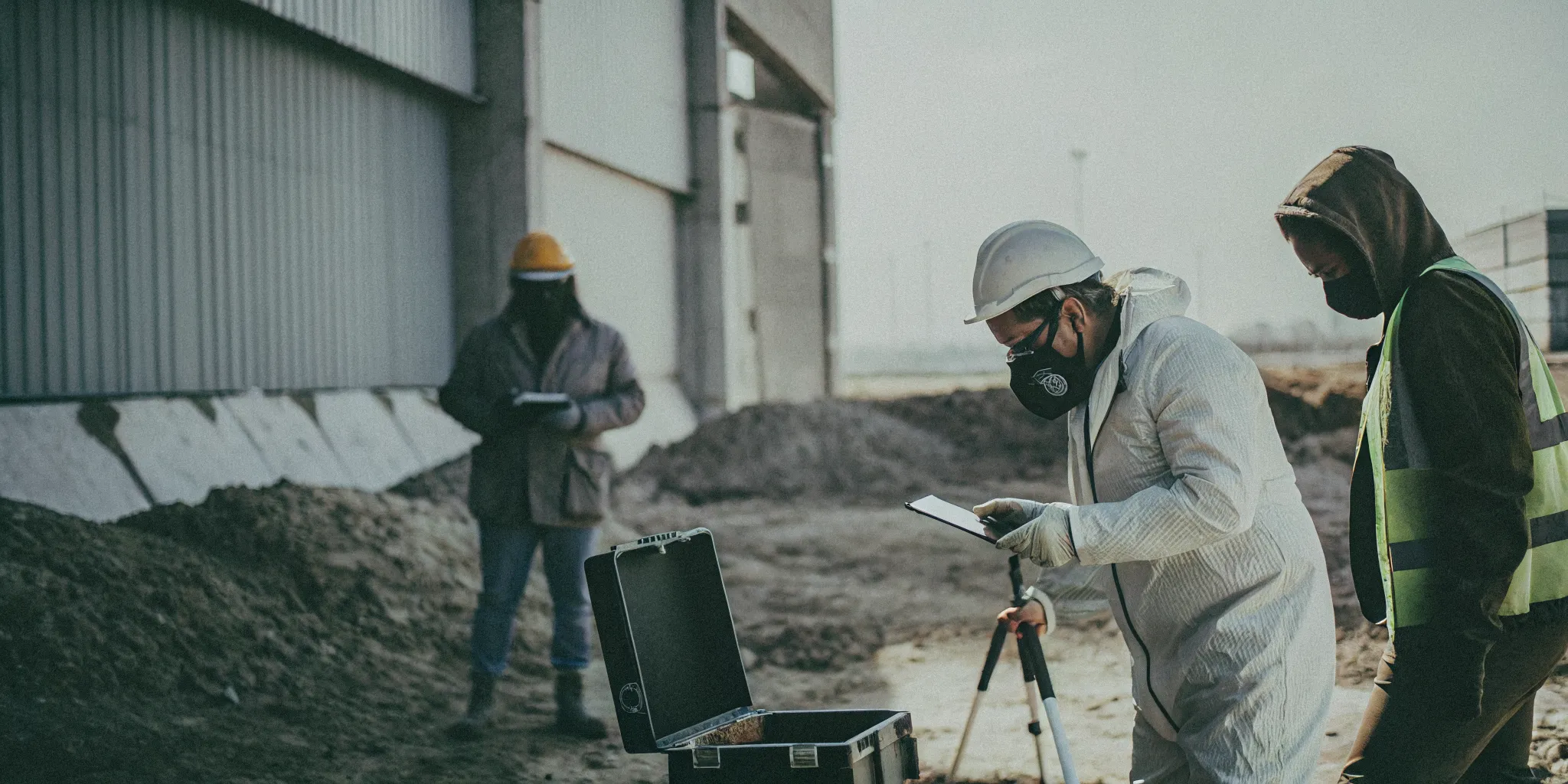
A Phase II environmental site assessment in Houston uses targeted sampling to test concerns found during earlier due diligence. The work plan may cover soil, groundwater, soil vapor, surface water, sediment, or building materials. The EPA describes these media as possible parts of an environmental investigation.
The selected media, sample points, depths, and lab tests depend on the property’s history and suspected release areas. A former fuel system calls for a different plan than a dry cleaner or industrial site. Houston-area soil conditions, groundwater depth, access limits, and the planned property use can also shape the scope.
Soil and groundwater samples
Soil samples help test whether a suspected release affected the ground beneath a property. Crews may collect them near tanks, drains, stained areas, storage zones, or other places tied to a concern. Borings can also show how conditions change with depth.
Groundwater sampling may be added when contaminants could have reached water below the site. Temporary points or monitoring wells allow the team to collect samples from chosen locations. Placement should help answer whether a release is present and where further study may be needed.
- Soil borings at targeted areas of concern
- Groundwater samples from temporary points or monitoring wells
- Field observations and screening results used to guide sample selection
- Laboratory testing for chemicals linked to the suspected source
A clear Phase II ESA process ties each sample location to a specific question. This focused approach helps avoid collecting data that does not address the recognized environmental condition.
Soil vapor and other media
Soil vapor testing may be useful when volatile organic compounds could move through subsurface gas. This can matter when a suspected source sits near an occupied building. Research shows that soil gas measurements can help locate pollution hot spots before more invasive work.
Other sites may need samples from surface water, sediment, or building materials. These media are not included by default. They enter the plan when site records, past use, field conditions, or the Phase I findings point to them.
Laboratory analysis and quality controls
Samples go to a laboratory for analysis that matches the suspected chemicals. The work plan should state the requested methods, reporting limits, containers, and handling needs. It should also explain how the results will be compared with the project’s goals.
Quality assurance and quality control help make the findings defensible. Common controls may include clear labels, chain-of-custody records, field notes, equipment cleaning, and duplicate or blank samples. These steps help the team track sample handling and spot possible data issues.
No single sampling plan fits every property. ASTM’s framework leaves room for site-specific goals and the user’s risk tolerance. The final scope should collect enough reliable data to confirm or rule out the concern without adding work that lacks a clear purpose.
Steps buyers and lenders can take before closing
Before ordering a Phase II environmental site assessment in Houston, buyers and lenders should align the investigation with the deal. Start with the Phase I findings, then define what evidence is needed before closing. A clear plan helps the team make sound decisions without assuming that sampling will remove every concern.
Define the investigation scope
Review the existing Phase I environmental site assessment and list each recognized environmental condition that needs more study. Confirm which findings may affect the loan, purchase terms, planned land use, or redevelopment budget. The EPA calls environmental due diligence an essential step when evaluating a property for transfer or reuse.
Next, ask the environmental professional to prepare a site-specific scope. It should state the target areas, possible contaminants, sampling media, laboratory methods, and reporting goals. Buyers and lenders should also agree on who will receive updates and who can approve changes if field conditions differ from the plan.
- Review the Phase I report and supporting records. Note each condition that needs testing, along with any missing records or unresolved questions.
- Define the decisions the results must support. Share relevant loan, purchase, redevelopment, and risk concerns with the environmental professional.
- Agree on the sampling and analysis plan. Confirm target areas, likely contaminants, sample types, laboratory methods, and data quality needs before fieldwork.
- Coordinate site access with the seller, tenants, property manager, and field crew. Confirm work areas, utility clearance, site rules, and repair expectations.
- Complete fieldwork under the approved plan and document each sample location. Record unexpected conditions so the deal team can assess any needed scope change.
- Send samples to the selected laboratory, then review results and quality checks. Ask the consultant to explain data gaps, limits, or follow-up needs.
- Review the final report with the environmental professional, legal counsel, and deal team. Compare findings with the agreed goals before choosing the next transaction step.
Coordinate access, fieldwork, and analysis
Field access can shape the quality of the investigation. The consultant may need entry to paved areas, active work zones, tenant spaces, or other controlled locations. Early coordination helps the crew follow site rules while collecting the samples required by the scope.
During the Phase II ESA process, the deal team should keep a record of approved scope changes. A field condition may call for a different sample location or added analysis. The environmental professional should explain why the change matters before the buyer or lender approves it.
Review findings against the deal
Laboratory results need context. Ask the consultant to explain what was tested, what was found, and what the data cannot show. The report should also connect the findings to the original conditions and state whether more work may be needed.
Buyers and lenders can then compare the report with their stated risk needs and closing terms. Counsel may help assess liability questions, while the lender can review effects on collateral. If important questions remain, the parties can seek more data before making a closing decision.
Discuss a site-specific Phase II investigation scope before your Houston closing
How Phase II findings can inform transaction decisions
A Phase II report gives buyers, sellers, lenders, and attorneys evidence for a focused transaction discussion. It does not dictate one required outcome. The right response depends on the findings, deal terms, planned property use, and each party’s risk tolerance.
This context matters because the EPA describes environmental due diligence as an essential step when evaluating property for reuse. A Phase II environmental site assessment in Houston can clarify risk while leaving several practical paths open.
Reading the report in context
Results should be read against the investigation scope, sampling locations, lab methods, and the criteria chosen for comparison. A finding below those criteria may reduce concern in the sampled area. It does not prove that every part of the property is free from contamination.
Detections above a comparison criterion call for closer review. The team may need to assess the affected area, likely source, exposure path, and planned use. Projexiv’s overview of the Phase II ESA process explains how targeted testing fits into buyer due diligence.
| Report finding | What it may mean | Possible transaction discussion |
|---|---|---|
| No detections above selected criteria | Sampled areas show no result above the chosen benchmarks | Proceed, while reviewing scope limits and other deal risks |
| Detections requiring further evaluation | Results need more study before risk is clear | Discuss added testing, cleanup planning, price, or deal terms |
| Data gaps or limited access | Key areas or questions remain unresolved | Seek access, extend diligence, or define who accepts uncertainty |
| Evidence of a focused concern | A specific area may need action or ongoing management | Discuss responsibility, schedule, budget, and closing conditions |
Data gaps and remaining uncertainty
A data gap can be as important as a detection. Access limits, buried utilities, site operations, or an incomplete sampling area may leave a key question open. The report should explain these limits so decision-makers can judge the remaining uncertainty.
Further work can be narrow and tied to the unresolved question. For example, the team might sample another area or study the extent of a known concern. Research on site characterization supports a stepwise screening approach that uses early findings to focus later investigation.
Turning findings into deal terms
Parties can respond in several ways. They may proceed as planned, extend due diligence, request more testing, adjust the price, set aside funds, or assign future work. A lender may also have separate requirements based on collateral risk.
The final choice should reflect both the evidence and the transaction’s goals. Buyers may focus on future use and cost, while sellers may focus on timing and defined responsibility. Counsel, lenders, and the environmental professional can help frame options without treating one report result as an automatic deal decision.
Houston factors that may shape the investigation
Houston properties do not share one standard sampling plan. For a Phase II environmental site assessment in Houston, scope should follow evidence about the parcel, its surroundings, and the planned transaction. The EPA describes environmental investigations as work that may examine soil, groundwater, surface water, sediment, and building materials.
Property history and possible sources
A property’s past uses can point the investigation toward specific areas, depths, and lab tests. Records may show former industrial work, fuel storage, waste handling, repair areas, or other uses tied to a recognized concern. The consultant should connect each proposed sample to that evidence rather than test the parcel at random.
Fill material also deserves a site-specific review when records or field observations raise questions about its source. Its presence alone does not prove contamination. Yet its location, depth, and history may affect where soil samples are placed and which analytes the laboratory checks.
The starting evidence often comes from a Phase I environmental site assessment. That report can help define which past uses need testing and which areas lack a clear basis for added work.
Nearby operations and movement pathways
An investigation may also consider nearby operations when the Phase I findings show a sound reason to do so. The key question is not whether industry exists nearby. It is whether a known or suspected release could affect the subject property through a plausible pathway.
That review may include the source location, the media of concern, and property conditions that could affect movement. Soil, groundwater, and soil gas answer different questions. Sampling should focus on the media most likely to confirm or rule out the concern.
For some sites, a stepwise plan can sharpen later decisions. Research on site characterization found that rapid screening can help locate possible subsurface hot spots before more costly work. The study also found that direct-push sensors provided three-dimensional plume information in the site examined.
Access and field logistics
A sound scope must also work on the actual property. Buildings, pavement, active operations, buried utilities, security rules, and limited equipment access may affect safe sample placement. These limits should be documented, then addressed without losing sight of the concern under review.
- Confirm access windows and required site escorts before mobilization.
- Mark utilities and review proposed boring locations against site plans.
- Plan for safe work around tenants, traffic, equipment, and operating areas.
- Document any inaccessible target and explain the alternate sampling approach.
Site logistics should shape how the work is performed, not weaken its purpose. A clear scope links each Houston property factor to a sampling choice, field limit, or decision point.
Questions to discuss before authorizing Phase II work
Before approving a Phase II environmental site assessment in Houston, align the buyer, seller, lender, counsel, and consultant on the investigation goals. Each party may have a different risk limit or closing need. A short planning call can expose conflicts before field crews arrive.
Site access and schedule
Start with access because sampling may affect tenants, parking, security, utilities, or daily work. Confirm who can approve entry and whether the consultant needs an escort. Ask the seller or property manager to disclose known utility lines, restricted areas, and site safety rules.
- Who will provide written access, keys, gate codes, and tenant notices?
- Can drilling occur during business hours, or is night or weekend work required?
- Which transaction dates depend on fieldwork, lab results, and the final report?
- Who will handle permits, utility clearance, drilling waste, and surface repairs?
Build time for field access, lab work, review, and follow-up questions. The parties should also decide how delays will affect due diligence periods. Reviewing the expected Phase II ESA process helps buyers set realistic milestones before authorizing work.
Scope rationale and reporting criteria
Ask the consultant to connect each proposed sample to a concern found during the Phase I environmental site assessment. The plan should state what media will be tested, where samples will be collected, and which lab analyses apply. It should also explain why the proposed locations can answer the main questions.
- Which recognized environmental condition does each sample location address?
- Will the work test soil, groundwater, soil gas, building materials, or another medium?
- Which comparison criteria will be used to review the lab results?
- What data limits or site conditions could leave a question unresolved?
- Who may receive drafts, lab data, and the final report?
Do not assume one standard defines every decision point. The EPA reuse assessment guide notes that investigations may address soil, groundwater, surface water, sediment, and building materials. Counsel and the lender should confirm whether their reporting needs call for any added work.
Costs, contingencies, and response options
Request a clear cost basis without relying on a single lump sum. Ask what the base scope includes and which events may require approval for added work. Common contingencies include hard drilling conditions, extra samples, disposal needs, repeat access, or added lab analysis.
- Which tasks, lab methods, and deliverables are included in the authorized scope?
- What conditions could change the schedule or cost, and who approves those changes?
- Will the consultant pause and seek approval before performing contingency work?
- How will each possible result affect negotiation, lending, further testing, or cleanup planning?
Agree on response paths before results arrive. The parties may proceed, seek more data, revise deal terms, require controls, or pause the transaction. Counsel should define who makes each decision and how findings may be shared during negotiations.
Get a site-specific Phase II ESA scope for your Houston property
Frequently Asked Questions
How much does a Phase II environmental inspection cost?
A standard commercial-property Phase II ESA commonly costs between $5,000 and $15,000, according to Projexiv Environmental. The final price depends on the REC, property size, number of sampling locations, laboratory analyses, and site access. Complex investigations may cost more when they require deeper borings, groundwater wells, vapor testing, or additional rounds of sampling.
How long does a Phase II environmental assessment take?
A Phase II environmental assessment may be completed within a few weeks, but buyers should generally allow about one month from start to finish. This estimate from Projexiv Environmental includes planning, fieldwork, laboratory analysis, data review, and reporting. Timing can increase when access is limited, specialized permits are needed, or initial results require more sampling.
Does every recognized environmental condition require Phase II sampling?
No. A REC identified during a Phase I ESA often triggers further investigation, but the appropriate response depends on the property and transaction. The ASTM E1903-19 standard notes that Phase II evaluation depends on site conditions, transaction goals, and the user’s risk tolerance. An environmental professional should define whether sampling is needed and design a scope suited to the concern.
What can a Phase II environmental site assessment test?
A Phase II ESA can test soil, groundwater, surface water, sediment, soil gas, and suspected building materials. The selected media and laboratory analyses should match the REC identified during the Phase I review. The EPA explains that environmental investigations assess hazardous substances or petroleum in environmental media and building materials. Sampling locations and depths remain specific to each site.
Ready to Scope Your Houston Phase II ESA?
Delaying site-specific scoping can leave key data gaps unresolved while transaction decisions, lender reviews, and project schedules remain exposed to avoidable uncertainty. Starting now gives your consultant time to align sampling locations, depths, and methods with the recognized environmental condition before fieldwork begins. A focused scope also helps your team obtain decision-ready findings without spending time and budget on investigation work that does not address the identified concern.
Prepare the Phase I report, property access details, known site history, and your transaction timeline so the initial discussion can focus on the right investigation. Ready to move forward with a clear plan? Request site-specific Phase II ESA scoping to define a practical next step for your Houston property.
