
Visible dust or recurring odors can put an active project under immediate scrutiny. Clear monitoring records help teams act quickly before a complaint becomes a regulatory issue.
Contact Projexiv about air monitoring services for your project.
Air monitoring services help industrial and construction teams document dust, odors, visible emissions, and other air concerns during work near employees or neighbors. A useful scope can combine selected measurements, field observations, monitoring locations, weather and activity notes, complaint records, corrective actions, and clear, dated, usable follow-up findings. The EPA describes ambient air monitoring as measuring air quality in the surrounding environment, which can provide evidence for site decisions. For projects in Texas and Alabama, organized records can help teams answer questions tied to TCEQ or ADEM oversight and document conditions before deciding next actions. The correct approach depends on each specific source, activity, permit, nearby receptor, reported concern, and agency expectation.
Project teams often need to know what to measure, what to document, and when results should shape the next step. Air monitoring services for active project decisions starts with that practical question and connects conditions in the field to usable records. Here’s how.
Air monitoring services for active project decisions
Air monitoring services help a project team understand what air conditions show, where emissions may matter, and which next decision needs documentation. They turn air observations into a working record for operations, construction planning, compliance review, and follow-up action. That record is useful before questions become delays, reporting gaps, or unresolved concerns.
What monitoring can clarify
Ambient monitoring addresses air in the surrounding environment, rather than relying on assumptions about conditions beyond an activity area. The EPA Ambient Monitoring Technology Information Center describes ambient air monitoring resources used to support accurate measurement of air pollutants. For an active project, that evidence can help a team decide whether a finding calls for review, records, or a response.
Industrial work may also need a clear view of visible emissions and the information used in emission inventory reporting. Projexiv provides visual emissions monitoring and air emission inventory reporting for industrial facilities. Those services keep the project question focused: what was observed, what must be recorded, and what compliance work may follow?
Teams seeking a service overview can review Projexiv’s professional air monitoring services while keeping attention on project decisions. The practical issue is not a generic service list. It is the air question that could affect work, records, or the next review.
Decisions tied to the monitoring record
Monitoring is most useful when it is linked to a pending choice, not treated as a stand-alone check. At the start, the team should define the activity under review and the compliance question that needs an answer. That question may concern visible emissions, surrounding air, an emission inventory, or the next compliance response.
- Before work: establish the air issue and the records needed for the planned activity.
- During work: review observations and note conditions connected to the project question.
- After a finding: determine whether reporting, permitting review, or compliance response is needed.
Some findings may point beyond monitoring alone. Projexiv’s air quality compliance work covers New Source Review, Permit by Rule registration, and Notice of Violation compliance response. Keeping that path in view helps a team route an air concern to the right review step.
At some major sources, another question is whether a control device is tied to an emission limit. The TCEQ guidance addresses Compliance Assurance Monitoring for certain emission units at major sources. It applies when a control device is used to meet an emission limit.
A decision-ready record also names what prompted the review and which item remains open. It gives owners, contractors, and facility teams the same basis for the next discussion. Monitoring records can then stay with the compliance question as it moves through review.
The goal is not data for its own sake. It is a clear record that supports the next project choice. With the scope and decision set first, monitoring can inform action while avoiding broad claims unsupported by the project record.
When can industrial sites benefit from air monitoring?
Industrial sites can benefit from air monitoring services when operations, materials, or nearby conditions change. A new production line, altered fuel use, added storage, or revised control equipment can raise questions about air impacts. Monitoring may help a facility check those questions with site observations, rather than assumptions. It does not mean the same method or schedule fits every operation.
Common triggers include a suspected emission source, visible plume, dust leaving work areas, or recurring odor reports near a boundary. A maintenance event, startup, shutdown, or complaint review may also call for closer review. Each trigger raises a practical question: what is happening, where, and during which operating condition? A clear purpose helps staff capture useful information during the event.
Monitoring approaches for specific concerns
Ambient monitoring looks at air in the surrounding environment, rather than only at equipment. According to the EPA Ambient Monitoring Technology Information Center, ambient monitoring addresses outside air. At an industrial site, it may help examine conditions near active areas, property edges, or nearby receptors.
Source or process monitoring focuses on an emission point or operating step. It can help connect observations with a process change, control device, fuel switch, or short-term event. That connection can support permit review, troubleshooting, or reporting decisions when those needs apply to the facility.
Visual and perimeter observations answer a different set of questions. Staff may record opacity, dust movement, odors, wind direction, or activity occurring during an observation. The EPA describes fenceline monitoring as a technique used to track pollutants at a facility boundary. For industrial sites, perimeter work should be chosen for the source, concern, and applicable requirements.
Records that support the next decision
Monitoring is most useful when the record can explain the result. A field note should tie the observation or sample to location, time, weather, process status, and any follow-up action. This context helps a team assess patterns after an odor report, visible emission, equipment change, or site visit.
Recordkeeping can support compliance planning without assuming that every site has the same duty. Permits, operations, and agency requirements shape what data is needed and how it should be kept. Useful files may include observation forms, lab results, equipment notes, and records of corrective actions.
Projexiv’s air quality compliance and monitoring page covers related planning and permitting topics for industrial facilities. A facility may first define the concern: process performance, boundary conditions, a complaint, or documentation needs. From there, it can choose ambient sampling, source-focused work, visual observations, or a combined plan.
How can construction dust and odor concerns be addressed?
Construction dust and odor concerns can be addressed by documenting the activity, location, weather, nearby receptors, and response steps, then selecting monitoring appropriate to that defined concern.
When concerns may arise
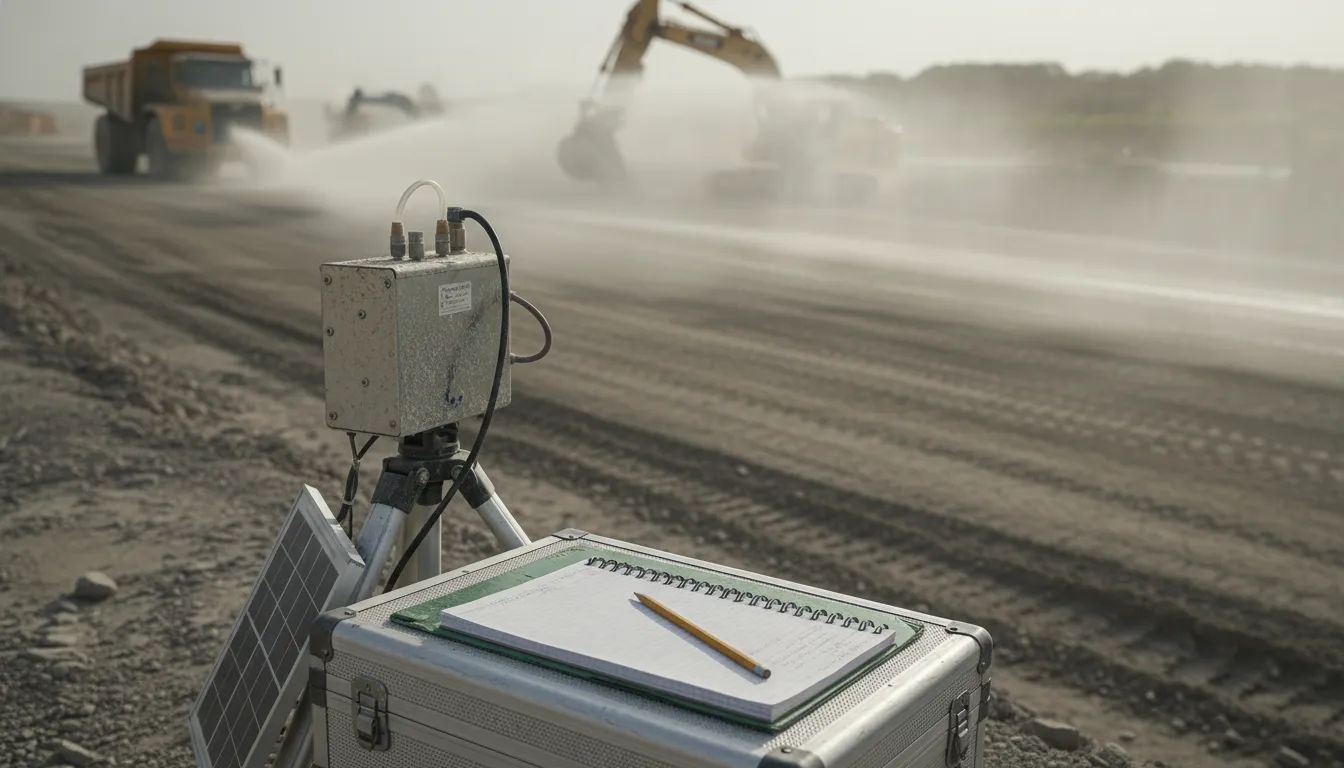
Construction work can change quickly as crews clear, grade, excavate, stockpile, or haul material. Dry soil may create visible dust during earthwork or truck traffic. Excavated soil, paving work, fuels, or coatings may also lead to odor or vapor concerns. These conditions do not mean every site needs air monitoring.
The need depends on the work, site setting, nearby receptors, permit terms, and complaint history. Receptors may include homes, schools, businesses, or public areas near the work zone. If a concern calls for measured air data, ambient air monitoring measures air quality in the surrounding environment. That can help a project team document conditions beyond visual observations alone.
Project-specific response planning
A plan should start with the likely source and the people or properties that could be affected. For dust, teams may focus on grading, loading, demolition debris, unpaved haul routes, or stockpiles. For odors or vapors, teams may review exposed material, product use, fuel handling, or unexpected field conditions.
Air monitoring services may be useful when nearby receptors are close, dust or odors recur, or complaints need a clear review path. A scoped approach can identify locations, work activities, weather notes, response levels, and reporting steps. It can also define when observations are enough and when sampling or instrument readings support decisions.
- Map work areas, property boundaries, haul roads, and nearby receptors before high-dust work begins.
- List tasks that could produce dust, odors, or vapors, including material movement and disturbed soil handling.
- Set a complaint intake process with time, location, work activity, wind direction, observations, and action taken.
- Choose monitoring points and response steps that match the work, rather than using a broad plan by default.
Construction managers often track several environmental controls at once. Dust and odor response planning is separate from Stormwater Compliance and SWPPP. Both benefit from mapped work areas, inspection records, and prompt corrective action. One does not create a requirement for the other.
Documentation that supports decisions
Useful records connect an observation or reading to what happened onsite. Keep field logs for active work, material moved, control measures used, weather conditions, photographs, complaints, and follow-up actions. Record whether work paused, water was applied, material was covered, or an odor source was reviewed.
When monitoring is selected, define who reviews results and how the team responds to changing conditions. Reports should state the purpose, locations, methods, work occurring, and any action taken. Projexiv’s professional air monitoring services page provides more context for teams evaluating that project-specific option.
Clear records help owners and contractors answer a practical question: what happened, what was checked, and what changed afterward? That approach supports timely field decisions without treating every construction site as the same risk profile.
Choosing a monitoring approach for the concern
Four questions that shape the approach
A useful monitoring plan begins with the concern, not the device. Is the question about off-site air, an on-site source, visible emissions, or a reported event? That first question helps narrow the record needed for a sound next decision.
Before selecting air monitoring services, define four items: concern, possible source, receptor, and decision. The receptor may be the property boundary, a nearby community, site staff, or a specific work area. The decision may involve review, follow-up monitoring, maintenance, permitting support, or response notes.
The source matters because the same air concern can begin with different activities or observations. A receptor at the boundary presents a different question than one near a known operating point. By separating source from receptor, a team can select records that answer the stated concern.
Approaches matched to the question
For an air concern outside the source area, ambient or perimeter monitoring can address what is present in surrounding air. The EPA describes ambient air monitoring as measuring air quality in the surrounding environment. At a facility boundary, location can align the record with the receptor in question.
A concern tied to equipment or operations points toward source or process records. If the concern is visible emissions, observation records may document what was seen and when. When the first notice is a complaint, a clear intake record can guide the next check.
| Approach | Useful purpose | Example trigger | Records produced |
|---|---|---|---|
| Ambient or perimeter monitoring. | Address air at or beyond a site area. | Boundary or nearby receptor concern. | Location, time, and monitoring records. |
| Source or process monitoring. | Review a concern tied to operations. | Known equipment or process question. | Operating and source-related records. |
| Visual emissions observation. | Document visible conditions. | Visible plume or opacity concern. | Observation time, location, and notes. |
| Complaint-response documentation. | Organize reported concerns and follow-up. | Odor, dust, or air complaint. | Intake, response, and follow-up log. |
Turning records into a useful next step
The table is a starting point, not a preset monitoring program. A facility may face more than one concern, such as a boundary report after an operating change. In that case, the team can match each question to a record, then review the records together.
Scope also depends on what decision the records must support. A prompt field response needs usable observations, times, locations, and follow-up notes. A broader air quality compliance and monitoring review may need records that fit permitting or agency response needs.
Before work begins, state the concern in plain terms and name the receptor. Note whether the source is known, suspected, or not yet clear. Then identify who will use the record and what choice it must inform.
These steps keep monitoring focused and make the file easier to review. They also avoid choosing an approach only because it has been used on another site. Projexiv can use the stated concern and decision need to frame a practical monitoring scope.
What documentation supports decisions in Texas and Alabama?
Useful documentation starts before a monitor is placed in the field. Teams should define why monitoring is planned and which decision the data will inform. The record may support permit work, a response to visible dust, operating changes, or routine site checks.
Texas and Alabama project teams can use the same core file structure. They can then adjust that file for site, permit, and client needs. This approach keeps air monitoring services tied to clear questions rather than isolated readings.
Scope and monitoring basis
A monitoring plan should state the project scope, work area, possible emission sources, and planned monitoring locations. It should also note why each location was chosen. This may include a site boundary, active work zone, or nearby sensitive area.
The EPA Ambient Monitoring Technology Information Center describes ambient monitoring as measurement of surrounding air quality. That basis matters when a team selects locations and records what each result can show. It also helps keep the plan aligned with the decision at hand.
- Project name, site address, contacts, and scope of work.
- Monitoring points, map references, and location rationale.
- Dates, times, monitoring periods, and equipment used.
- Weather, site activity, access limits, and nearby conditions.
Field record and result log
A field record should pair each reading with its setting. Log site conditions, work taking place, visible observations, unusual events, and any change in sampling location. For projects needing air quality compliance and monitoring, this context helps reviewers follow the data trail.
Results should be recorded in a consistent log, with units and sample identifiers shown clearly. If a result prompts an action, note what changed and when. Examples include checking a work practice, moving a monitor, repeating a sample, or reviewing a source area.
- Observation linked to its date, time, and monitoring point.
- Result linked to field notes and supporting records.
- Action taken, responsible party, and completion time.
- Follow-up reading or review, with the outcome noted.
Agency-ready follow-up record
Agency coordination depends on project and permit conditions. A Texas team may need to coordinate with TCEQ. An Alabama team may need to coordinate with ADEM. Keep records clear before a question or reporting need arises.
A complete file makes follow-up easier when conditions change or questions arise. Keep the scope, monitoring map, field logs, results, actions, and later checks together. Broader environmental plans and reports can place monitoring records within the full project decision record.
Review air quality compliance support for monitoring findings and next steps.
Building air monitoring into project planning
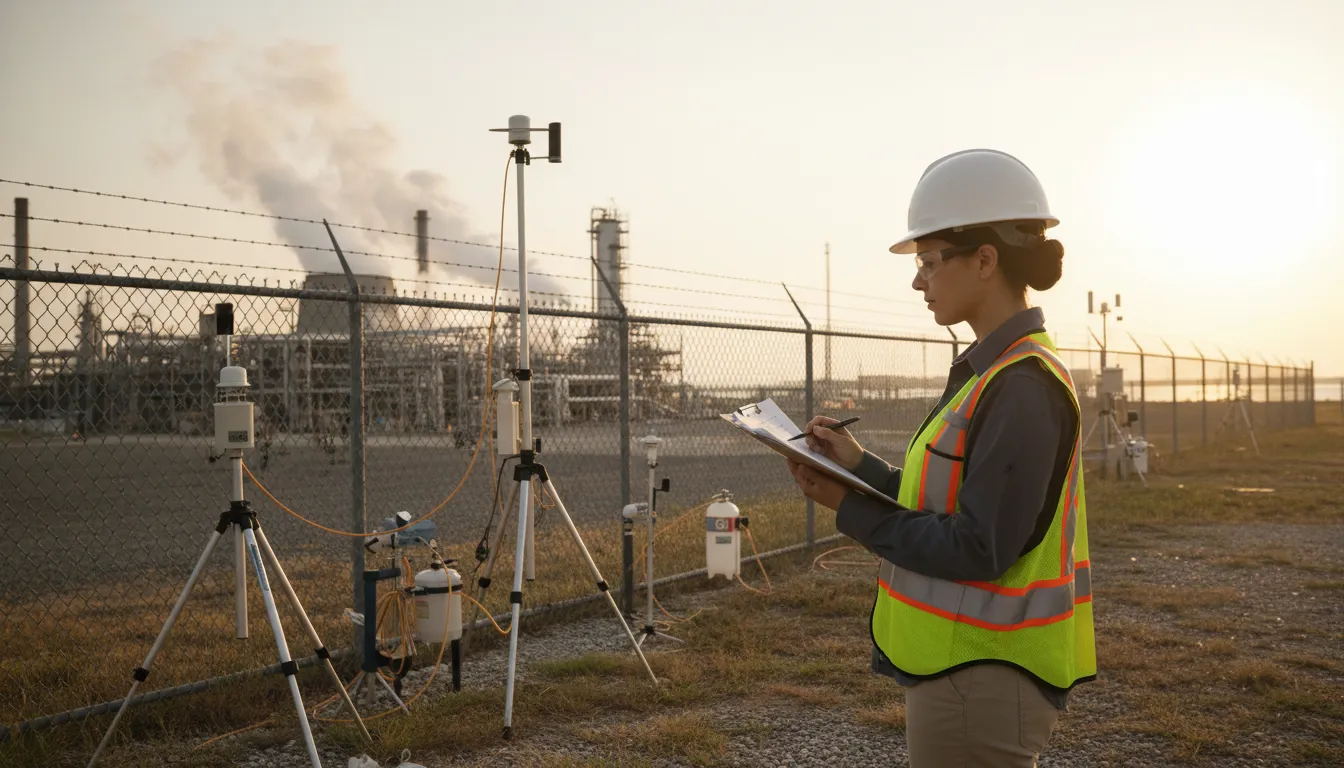
Planning for air monitoring starts before work begins. For industrial sites and construction projects, the plan should connect each concern to a clear field decision. The EPA describes ambient air monitoring as measuring air quality in the surrounding environment. Its ambient monitoring resources help teams understand that purpose before choosing methods.
A project team may use professional air monitoring services when site conditions call for planned, recorded checks. The aim is a usable plan, not a stack of notes that no one reviews.
A sequence for monitoring decisions
Good planning begins with the reason for monitoring. Dust near grading, visible emissions during operations, or an odor complaint may each lead to a different response. Keep the sequence simple enough for field staff and project managers to use on active workdays.
-
Define the concern and decision. Record the activity, area, material, or complaint that prompted review. State what finding would trigger follow-up.
-
Set locations and timing. Choose points that fit the work area, site boundary, nearby activity, and normal access limits. Note when work starts, changes, pauses, or ends.
-
Select the monitoring approach. The concern may call for a field observation, a planned monitoring method, or both. Match the method to the question, not to habit.
-
Document conditions with each finding. Record the date, time, location, task in progress, weather conditions, and monitoring method. Then record the finding and any field note needed to explain it.
-
Respond to results or complaints. If a result or field concern calls for review, log it promptly and assign the next action. A complaint record should capture the reported issue, its timing, and what staff checked.
-
Review the next compliance action. Findings may point to more monitoring, work practice changes, permit review, reporting, or a broader compliance review. Keep this review tied to recorded facts.
Findings that guide next actions
Monitoring records are useful when they answer basic project questions: what occurred, where, when, and what happened next. Review findings at set project points, such as before a new phase or after a recorded concern. This keeps the team from collecting information without using it.
Some findings stay within the monitoring plan. Others raise a larger site compliance question. When air issues may overlap with permits or program duties, consider environmental compliance audits. This step helps organize the next review; it is not legal advice.
Keeping the plan ready for field use
Before field work, put the current plan where supervisors can reach it. Use consistent names for locations and work activities, so notes can be compared without guesswork. A short staff review can confirm who records observations and who receives concerns.
After each monitoring period, check records for gaps, unclear entries, or follow-up that remains open. Update the plan when site work changes the question being asked. That practical loop makes air monitoring services part of project control, not a separate task.
Frequently Asked Questions
What are air monitoring services for industrial and construction projects?
Air monitoring services collect measurements and observations to describe air conditions, emissions, or visible impacts during a defined project period. For industrial work, records may support operating reviews, emission concerns, and compliance documentation. For construction work, monitoring may address dust, odors, nearby receptors, or complaint response. Projexiv provides visual emissions monitoring and air emission inventory reporting for industrial facilities. The appropriate scope depends on the activity, potential source, site setting, and documentation purpose.
How can air monitoring services help with construction dust or odor concerns?
Air monitoring can help a construction team document where and when dust or odors occur, especially near boundaries, haul routes, or neighboring properties. Records may combine readings or observations with weather conditions, work activities, complaint logs, and follow-up actions. This information can guide practical adjustments, such as reviewing controls or changing task timing. Monitoring does not establish that every concern has one source. It also does not replace permit terms, health and safety duties, or other applicable requirements.
What is the difference between ambient air monitoring and source monitoring?
Ambient air monitoring evaluates air in the surrounding environment, such as at a project perimeter or near a receptor. The EPA Ambient Monitoring Technology Information Center provides information on accurate air pollutant measurement. Source monitoring focuses on emissions associated with a defined vent, stack, process, or operation. The approaches answer different questions. Ambient data describe conditions at a location, while source data help assess emissions connected to a particular source or operating activity.
Do Texas or Alabama industrial and construction projects require air monitoring?
Not every Texas or Alabama project requires the same air monitoring. Applicability varies with the project activity, emission source, permit terms, complaints, nearby receptors, and agency obligations. For some major-source emission units using control devices, Texas Compliance Assurance Monitoring requirements may apply. Other projects may use monitoring to support decisions or records. Project teams should review current permit and regulatory requirements with qualified compliance support before selecting a monitoring plan.
Ready to Plan Air Monitoring Before Work Gets Delayed?
Waiting to define air monitoring needs can leave project teams reacting to dust, emissions, schedule changes, or compliance questions after work begins. Starting now gives your Texas or Alabama team time to identify monitoring needs, align responsibilities, and prepare a practical site-specific approach before mobilization. Early planning also helps decision makers address concerns sooner, rather than sorting out preventable gaps during active construction, facility operations, or changing project schedules.
Ready to move from planning questions to clear monitoring steps? Call (713) 714-0413 to contact Projexiv about air monitoring and air quality compliance support. Talk to a consultant now to discuss the right next steps for your site and schedule. A prompt review can help organize responsibilities before site work begins and monitoring decisions become urgent.
Ready to Get Started?
Get in touch with our environmental consultants for a fast, no-obligation quote.
